PCBA (Printed Circuit Board Assembly) is a very common terms used in the electronics industry, which stands at the heart of modern electronic devices, all the compact, efficient, and reliable electronic products we use today rely on it. In this blog, we will explain what PCBA is, how it differs from PCB, its key benefits and applications. Let’s dive right in.
What Is PCBA?
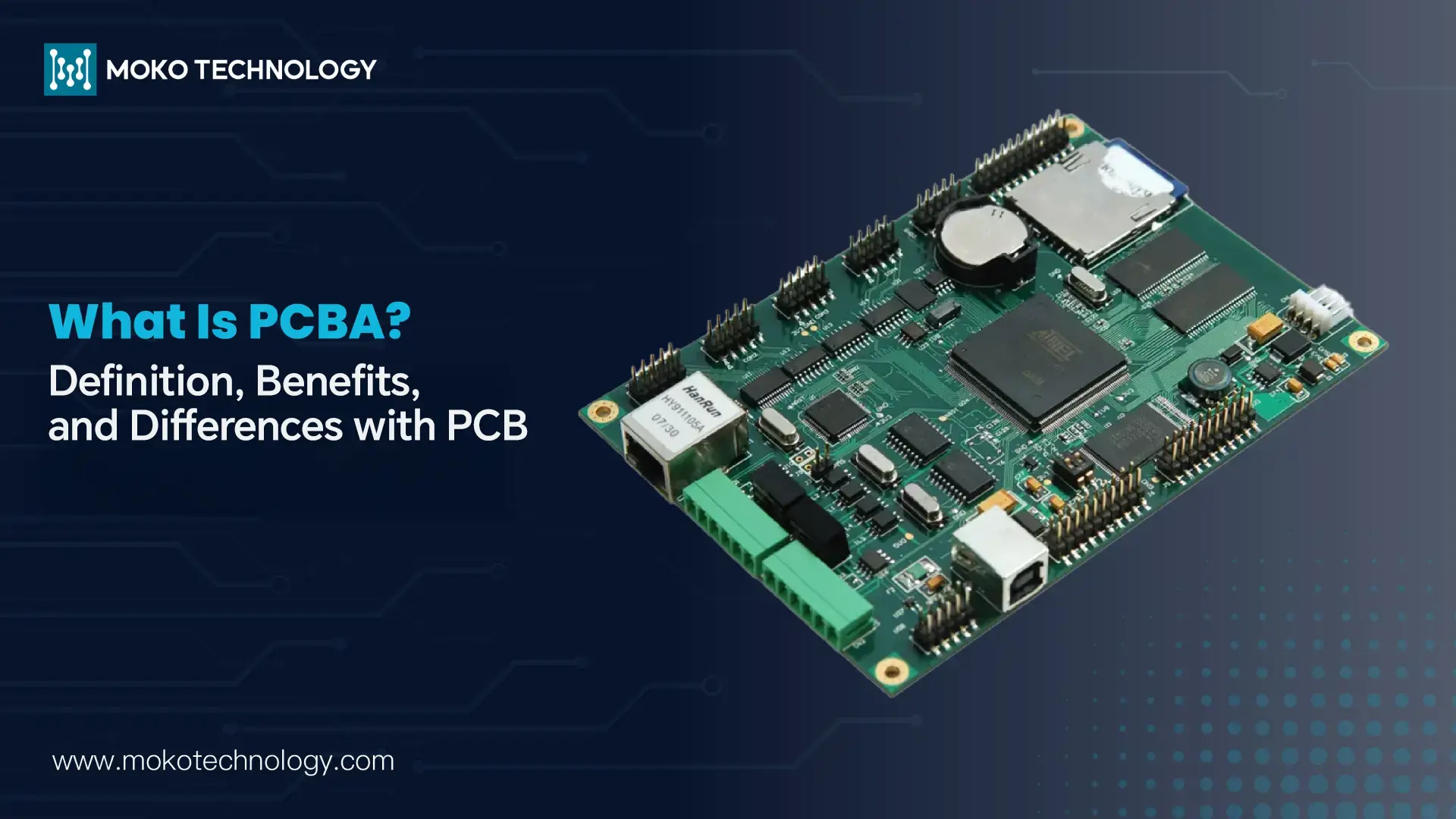
PCBA refers to the finished board after all the electronic components have been assembled onto a circuit board. The process of assembling these components on the a bare PCB is known as PCB Assembly, which is a critical stage in electronics manufacturing. PCBA provides the electrical and mechanical foundation that enables all components to function together and perform the intended operations of an electronic device.
Differences between PCBA and PCB
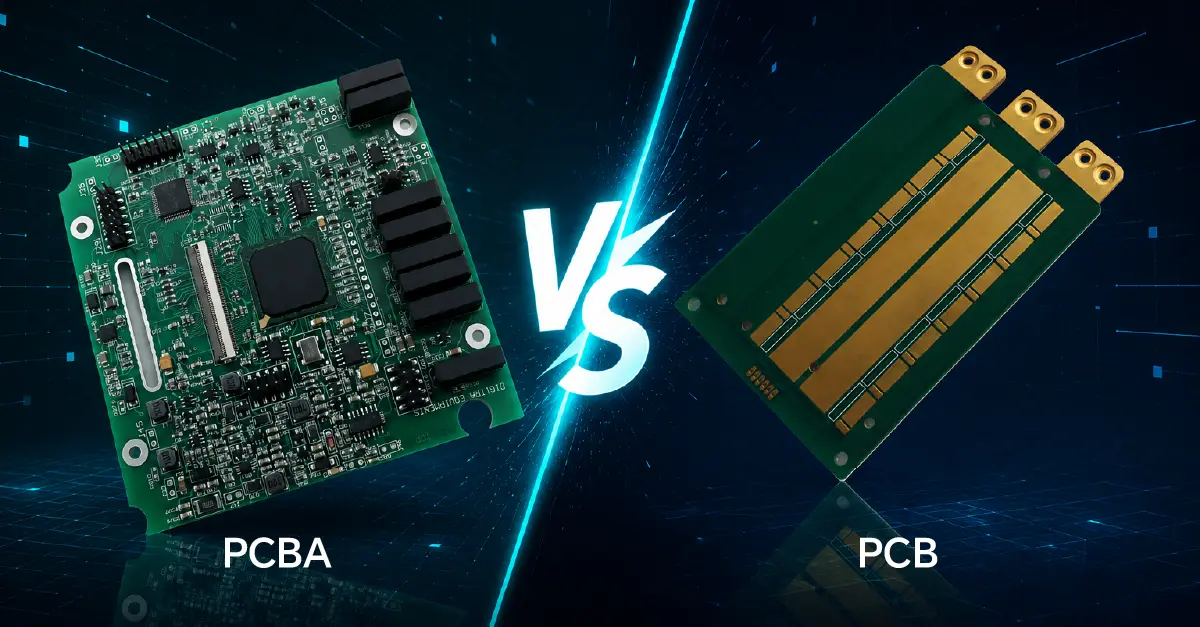
PCB and PCBA are two terms that many people often feel confused, especially those who are new to electronics industry. Knowing their differences helps to make informed decisions in electronics design, sourcing, and manufacturing.
PCB (Printed Circuit Board)
A PCB is a bare board with a non-conductive substrate and conductive pathways, but no components attached. It acts as a mechanical and electrical platform.
PCBA (Printed Circuit Board Assembly)
PCBA is a PCB that has electronic components such as resistors, capacitors and integrated circuits(ICs) soldered onto it and is completely functional.
Below we have listed a table that compares the main differences between PCB and PCBA:
| Feature | PCB | PCBA |
| Definition | Bare board with conductive tracks | Completed board with components |
| Components | No components attached | Components soldered onto the board |
| Functionality | Cannot function on its own | Ready for use in electronic devices |
| Complexity | Simpler | More complex |
| Cost | Lower | Higher (includes components and assembly) |
| Testing | Basic electrical tests | Functional and quality tests |
| Time to produce | Shorter | Longer (includes assembly time) |
Want to explore this comparison in more depth? Check out our full guide: PCB vs PCBA: What’s the Difference and How to Choose?
Why PCBA Matters: 5 Key Benefits Explained
The advent of PCBA has greatly accelerated the development of the electronics industry, enabling more powerful and compact devices. Here are the key benefits of PCBA:
- Simplified assembly process: Before the emergence of PCBA, assembling electronic products required a lot of manual soldering, which was slow and prone to issues. PCBA solves this with automated surface-mount technology (SMT), offering both accuracy and efficiency.
- Improved reliability: PCBA is built using high-precision manufacturing processes and premium materials to ensure stable circuit connections. Meanwhile, its layout and trace routing are carefully designed to improve the product performance.
- Flexibility and customization: PCBA can be designed and manufactured to fit specific customer needs, including its function, size, and performance. Its customizability makes it widely used across various industries.
- Cost efficiency: The automated production process of PCBA helps to lower the manufacturing cost, and its reliability also reduces the long-term repair and replacement expenses.
- High-density integration: PCBA enables components to be packed together with remarkable density, allowing devices to be fabricated in smaller size while integrating more functions.
Applications of PCBA
PCBA (Printed Circuit Board Assembly) is used in almost all walks of life. Below are the main application areas:
- Consumer electronics: This is one of the fields where PCBA is most widely applied. Television, smartphone, laptop, game consoles and so on all rely on PCBA to achieve various functions.
- Telecommunications: PCBAs are utilized in the telecommunications industry to provide data transmission and communication functions. Common use cases include wireless base stations, fiber-optic communication equipment, satellite communication equipment, etc.
- Automotive Electronics: PCBAs are also used in modern vehicles, including their Engine Control Units (ECUs), in-vehicle infotainment systems, and safety systems.
- Medical Equipment: In the medical industry, many devices rely on PCBAs, such as patient monitors, surgical instruments, and medical imaging systems.
- Industrial Control Equipment: PCBA is also a core part of most industrial automation equipment like PLCs (Programmable Logic Controllers), sensors, and industrial robots
How Is a PCBA Manufactured?
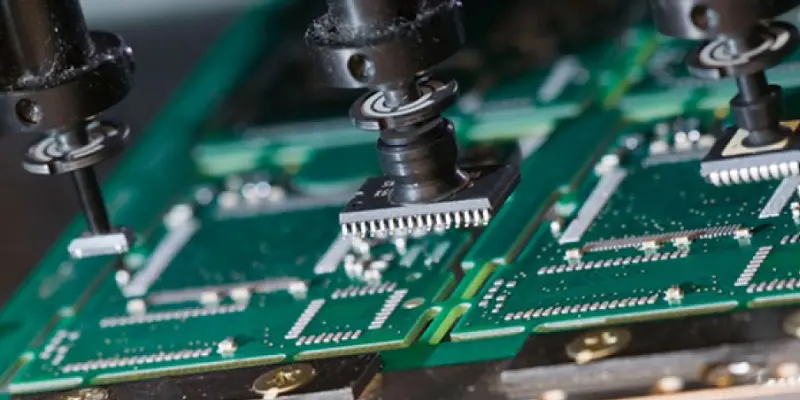
Manufacturing a PCBA is a process that turns a bard PCB board into a fully functional circuit board by assembling components onto its surface. Manufacturers usually use Surface Mount Technology (SMT), Through-Hole Technology (THT), or a combination of both assembly methods, depending on the product design and application requirements.
A typical PCBA manufacturing workflow includes:
- PCB fabrication
- Component sourcing
- Solder paste printing
- Component placement
- Soldering (reflow soldering and/or wave soldering)
- Inspection and testing
- Final quality control
Each stage should be carefully operated so as to manufacture high-quality PCBAs with reliable solder joints, and proper component placement.
If you’d like to learn more about each stage of the PCBA manufacturing process, including SMT assembly, reflow soldering, AOI inspection, and functional testing, read our PCB Assembly Process: A Step-by-Step Guide.
How to Choose the Best PCBA Manufacturer?
Choosing the best PCBA manufacturer is crucial to ensuring the quality and reliability of the products. Below we list key factors that should be considered when finding your PCBA manufacturing partner:
- Quality Assurance
The quality is always the primary concern. When selecting a PCBA manufacturer, we must consider whether they meet industry standards, whether they hold certifications like ISO9001 or ISO13485 (for medical devices), and whether they have a strict quality control system.
- Technical Proficiency
In order to work on your project, a PCBA manufacturer must be capable of meeting the specifications of your project. This comprises their skill in handling various technologies of the PCBA such as through-hole and surface-mount technologies; their ability to handle the various components and materials, and their manufacturing capabilities as well.
- Pricing
Though quality is crucial, one cannot overlook the cost factor in manufacturing the PCBA. It is always ideal for us to work with a PCBA manufacturer who provides affordable prices and quality products at the same time.
- Production Timeline
Another important consideration is the time that it takes to produce the PCBA. In this regard, it is essential to choose a manufacturer that is well capable of working within your time frame to deliver high-quality boards.
FAQs about Printed Circuit Board Assembly
What does PCBA stand for?
PCBA stands for Printed Circuit Board Assembly. It is a completely functional circuit board that has been assembled with electronic components.
Is PCBA the same as PCB?
No. A PCB (Printed Circuit Board) is a bare circuit board, and a PCBA (Printed Circuit Board Assembly) is a PCB with attached components and ready to perform electronic functions.
What factors affect PCBA cost?
Major factors affecting PCBA cost include the size of the board, number of layers, complexity, number of components, volume of production, type of tests that need to be done, and the time it takes to complete. Higher complexity and shorter turnaround time usually lead to the higher cost.
Can I use both through-hole and surface-mount components on the same PCBA?
Yes, through-hole and surface-mount components can be used on the same PCBA, in this way, the PCBA benefits from the strong mechanical strength of through-hole and the high density of surface-mount technology.
Can PCBAs be repaired if they fail?
In most cases, Yes, they can be repaired. However, some severely damaged PCBAs can not be repaired. Generally, repairing PCBAs involves replacing components, and fixing soldering issues or damaged traces.
Conclusion
PCBA transforms a bare PCB into the fully functional heart of every electronic device, enabling the reliability, precision, and miniaturization that modern products depend on. Whether it’s in consumer electronics, automotive systems, or the medical field, its ability to enhance efficiency, customization, and performance makes it an essential part of various industries. With the rising demand for smaller and smarter devices, selecting the right PCBA manufacturing partner is key to converting a good design into a reliable end product.
At MOKO Technology, we are dedicated to delivering high-quality PCBAs at competitive prices, with a commitment to transparency and no hidden fees. We are proficient in different PCB assembly technologies, and our state-of-the-art facility is designed to accommodate the diverse needs of our clients. We have a stringent quality control process to ensure the quality of each product. Reach out to us to start your project now!